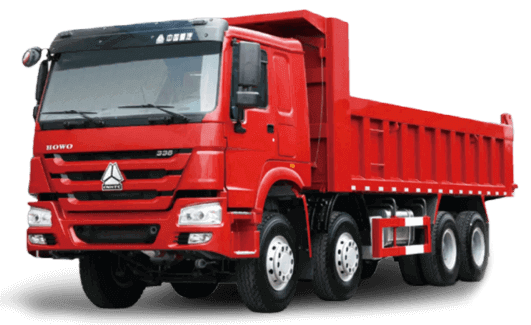
6×4 vs 8×4 Tipper Trucks: Which Configuration Suits Your Project?
September 25, 2026 - By Admin
Tipper trucks are widely used in construction, road development, infrastructure and material transportation projects. They are designed to carry and unload materials such as sand, aggregates, soil, gravel and construction debris, making them an important part of many heavy-duty operations.
When choosing a tipper truck, one of the specifications buyers commonly compare is the axle configuration. Two widely used configurations are 6×4 and 8×4 tipper trucks.
While both configurations are designed for heavy-duty applications, they differ in axle arrangement, load distribution, manoeuvrability and potential applications. For contractors, transport businesses and construction companies in Oman, understanding these differences can help when selecting a truck for a particular project.
This guide explains the differences between 6×4 and 8×4 tipper trucks and the factors businesses should consider before purchasing one.
What Does 6×4 Mean on a Tipper Truck?
The term 6×4 describes the truck's wheel and drive configuration.
The first number refers to the total number of wheel positions, while the second indicates how many wheel positions are driven. A typical 6×4 tipper truck has three axles, with two driven axles.
This configuration provides a combination of load-carrying capability, traction and manoeuvrability, making it suitable for a variety of construction and material transportation applications.
A 6×4 tipper truck can be considered for:
- Construction material transportation
- Road construction
- Earthmoving
- Quarry-related transportation
- Sand and aggregate transportation
- General infrastructure work
Its configuration can be useful for projects where a balance between payload capability and vehicle manoeuvrability is required.
What Does 8×4 Mean on a Tipper Truck?
An 8×4 tipper truck generally has four axles, with two driven axles.
The additional axle can help distribute the vehicle's permitted gross weight across more axles, depending on the truck's design and applicable regulations.
8×4 configurations are commonly considered for demanding applications involving substantial material transportation requirements.
These trucks may be suitable for:
- Large-scale infrastructure projects
- Road and highway construction
- Heavy aggregate transportation
- Quarry operations
- Large construction sites
- Major earthmoving projects
However, the suitability of an 8×4 tipper truck depends on its manufacturer specifications, permitted weights, body design, operating environment and applicable regulations.
6×4 vs 8×4 Tipper Trucks: What Is the Difference?
The primary difference between a 6×4 and an 8×4 tipper truck is the number of axles and how the vehicle distributes its weight.
A 6×4 truck normally has three axles, while an 8×4 truck normally has four axles. Both configurations typically have two driven axles.
The additional axle on an 8×4 truck can provide a different weight-distribution arrangement, which may be useful for projects involving substantial loads. However, an 8×4 vehicle can also have different space and manoeuvrability requirements compared with a 6×4 truck.
A 6×4 configuration may be more practical for projects where access, turning space and general manoeuvrability are important considerations.
An 8×4 configuration may be considered for larger construction and infrastructure operations where the vehicle's additional axle and weight-distribution characteristics match the project requirements.
The final choice should always be based on the specific vehicle's specifications and the conditions in which it will operate.
When Should You Consider a 6×4 Tipper Truck?
A 6×4 configuration can be considered when a project requires heavy-duty transportation combined with practical manoeuvrability.
Construction projects often involve frequent movement between loading areas, temporary roads, stockpiles and unloading locations. A truck should therefore be able to operate effectively within the available site space.
- Construction Sites
Building projects may require regular transportation of excavated soil, sand, gravel and construction materials. A 6×4 truck can be considered when its payload and body specifications match the material and workload.
- Road Construction
Road development projects involve moving aggregates, soil and other materials between stockpiles and work areas. A 6×4 configuration can be suitable for applications where the truck needs to operate both on roads and within project sites.
- Quarry Operations
Depending on the material, route and permitted payload, 6×4 tipper trucks can be used for transporting aggregates and other bulk materials.
- General Material Transportation
Businesses that handle different types of construction materials may consider a 6×4 tipper when versatility and manoeuvrability are important requirements.
When Should You Consider an 8×4 Tipper Truck?
An 8×4 configuration may be considered when a project requires a heavy-duty truck with four axles and the operating environment can accommodate the vehicle.
- Large Infrastructure Projects
Highway development, major earthworks and infrastructure projects can involve significant quantities of material movement. An 8×4 truck may be considered where its specifications match the required workload.
- Heavy Aggregate Transportation
Projects involving dense materials such as crushed stone and aggregates require careful consideration of payload and axle loads. An 8×4 configuration can be considered when the vehicle's specifications and permitted operating limits are appropriate.
- Large Construction Sites
Where there is sufficient space for loading, turning and unloading, an 8×4 tipper truck can be considered for demanding material transportation requirements.
- High-Volume Material Movement
Projects moving large quantities of material may require careful planning around payload, legal weight limits, loading times and the number of trips required.
Payload Capacity Should Not Be the Only Consideration
One common mistake when comparing 6×4 and 8×4 tipper trucks is focusing only on the body volume.
The body may have a particular cubic-metre capacity, but the actual amount of material that can be transported depends on its weight, the truck's permitted payload and applicable axle-load limits.
For example, sand and crushed stone can have different densities. A body that can physically hold a particular volume may reach the vehicle's permitted weight before it is completely filled.
When comparing trucks, review the:
- Gross vehicle weight
- Permitted payload
- Unladen weight
- Axle configuration
- Body volume
- Material density
- Manufacturer specifications
- Applicable regulations in Oman
This helps ensure that the selected truck matches the actual material and transportation requirements.
Consider Oman's Road and Working Conditions
The operating environment is another important factor when choosing between 6×4 and 8×4 configurations.
Construction and infrastructure projects in Oman can involve paved roads, temporary access routes, construction sites and areas with challenging terrain. The truck should therefore be selected according to the actual route and project conditions.
Road Conditions
Review the type of roads the truck will travel on and the condition of temporary project routes.
Site Access
Check entrance widths, turning areas, loading zones and unloading locations before selecting the vehicle.
Terrain
Projects involving uneven or demanding terrain require consideration of traction, ground clearance, tyres and suspension.
Operating Distance
Long-distance transportation can place different demands on a truck compared with short trips within a construction site.
Understanding these conditions can help businesses select a configuration that is appropriate for the project.
Engine Performance and Drivetrain
Axle configuration is only one part of truck selection. Engine and drivetrain specifications are also important when comparing heavy-duty tipper trucks.
A truck carrying heavy materials may operate on inclines, uneven surfaces and construction routes where adequate power and traction are required.
When comparing 6×4 and 8×4 trucks, review:
- Engine power
- Torque output
- Transmission
- Gear ratios
- Drivetrain
- Fuel consumption
- Cooling system
- Manufacturer service requirements
The engine and drivetrain should match the expected load, route and operating conditions.
Tipper Body Design Matters
The truck chassis is only one part of the selection process. The tipper body should also match the material and application.
For heavy-duty construction work, consider the body's:
- Capacity
- Construction material
- Floor thickness
- Side-wall design
- Hydraulic tipping system
- Wear resistance
- Unloading characteristics
A body designed for the intended material and working environment can support practical day-to-day operation.
Manoeuvrability and Site Accessibility
Another important difference to consider is how the truck will operate within the project site.
Construction sites can have narrow entrances, temporary roads, limited turning areas and changing access routes. Before selecting a truck, businesses should evaluate the available operating space.
A 6×4 truck may be considered when the project involves frequent movement through areas where manoeuvrability is important.
An 8×4 truck may be more appropriate where there is adequate space for loading, turning and unloading and where the project requirements justify the larger multi-axle configuration.
The physical dimensions and turning characteristics of the specific truck should be checked rather than making a decision based only on its axle configuration.
Operating Costs Should Also Be Considered
The purchase price is not the only cost associated with a tipper truck.
Businesses should consider the expected operating expenses over the vehicle's working life. These may include:
- Fuel consumption
- Routine maintenance
- Tyre replacement
- Repairs
- Insurance
- Registration and applicable fees
- Driver costs
- Downtime
- Replacement parts
The truck that appears less expensive initially may have different operating costs depending on its usage, maintenance requirements and workload.
For this reason, businesses should compare the overall ownership requirements rather than focusing only on the initial purchase price.
Which Configuration Should You Choose?
There is no single configuration that suits every construction project.
A 6×4 tipper truck can be considered when a project requires a combination of heavy-duty capability, traction and manoeuvrability. It can be useful for construction, roadwork, aggregate transportation and general material-handling applications.
An 8×4 tipper truck can be considered when a project involves substantial loads, greater weight-distribution requirements and sufficient space for operating a larger multi-axle vehicle.
The decision should be based on the actual project requirements rather than simply choosing the configuration with more axles.
Before purchasing a tipper truck, compare:
- Payload specification
- Gross vehicle weight
- Axle ratings
- Engine and transmission
- Body capacity
- Fuel requirements
- Safety systems
- Maintenance requirements
- Site accessibility
- Intended operating conditions
Buying a Tipper Truck in Oman
For businesses planning to purchase a tipper truck in Oman, it is important to evaluate the vehicle according to the type of work it will perform.
Construction companies, infrastructure contractors, quarry operators and transportation businesses may have different requirements depending on their materials, routes and operating schedules.
Carmel Group Oman provides commercial vehicles and heavy equipment for business and project requirements. Businesses searching for trucks for sale in Oman can review available options and contact the team to discuss their requirements.
When enquiring about a tipper truck, it is useful to provide details such as:
- Project type
- Project location
- Material being transported
- Expected load
- Required body capacity
- Typical travel distance
- Road and site conditions
- Expected operating hours
Providing these details can help clarify which truck specifications are relevant to the project.
Final Thoughts
Choosing between a 6×4 and 8×4 tipper truck requires more than comparing the number of axles.
Payload requirements, material density, road conditions, site accessibility, body design, engine performance and operating costs all influence whether a particular truck is suitable for a project.
For construction and infrastructure projects in Oman, businesses should assess their actual transportation requirements and compare manufacturer specifications before making a purchase decision.
Whether a project requires a 6×4 or 8×4 configuration, selecting a truck that matches the workload, operating environment and transportation requirements can support practical fleet planning and material movement.